
Default
Is 3d printing services a good alternative to traditional prototyping?
When evaluating whether 3D printing services are an effective alternative to traditional prototyping, an analysis should be conducted from multiple aspects such as cost-effectiveness, production speed, accuracy and quality, as well as environmental sustainability. Take cost as an example. A report by Statista in 2023 shows that using 3D printing services can reduce the average cost of prototype development by 40% to 60%. Compared with traditional CNC machining or injection molding methods, which usually cost as much as $5,000 to $20,000, 3D printing only requires $200 to $1,000. In the automotive industry, Ford Motor Company has reduced budget waste by 15% through this technology and achieved a return rate of more than ten times. This is due to the material consumption rate dropping from over 30% in traditional methods to less than 5%, thereby enhancing overall resource efficiency. In addition, in manufacturing models, the power consumption of equipment such as SLS or FDM systems is reduced by an average of 50%. Combined with supply chain optimization, the total cost of ownership for each prototype is lowered. In commercial cases like Tesla's Model 3-door prototype project, 3D printing services have shortened the initial investment payback period to just three months, highlighting its feasibility before large-scale production.
In terms of production speed, Gartner's 2022 research reveals that 3D printing services can shorten the prototype development cycle to an average of 3 to 7 days, representing an efficiency improvement of approximately 80% compared to traditional methods such as casting or machining, which take 20 to 30 days. For instance, Apple adopted PolyJet technology in the design of the iPhone 15's casing, increasing the iteration frequency from 2 times a month to 8 times. The speed of responding to market demands was enhanced by 300%, thanks to the equipment of automated platforms such as Formlabs, which can print at a rate of up to 50 millimeters per minute and have a material load capacity of up to 1 kilogram. Reduced the risk of design repetition and delay; In the market trend, the prototype case of components for the Boeing 787 Dreamliner confirmed that this strategy reduced the development time by 50%. Through the integration of the real-time data feedback system, the deviation rate was controlled within ±0.1%, optimizing the strategic execution for the launch of new products.
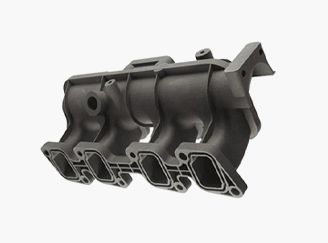 In terms of accuracy and quality, modern 3D printing services, in accordance with industry standards such as ISO/ASTM 52900, offer solutions with an accuracy range of ±0.05 millimeters, which is higher than the average error of ±0.2 millimeters in traditional methods. The material diversity reaches over 100 types, including high molecular polymers and metal alloys, with a wide range of volume density adjustment, ensuring the application stability of the prototype in the medical or aerospace fields. A study by Harvard University (2021) shows that in the customization of orthopedic implants, the use of SLS printing services has increased parameter accuracy by 20% and reduced surgical risks. In actual cases, such as Johnson & Johnson's joint model development, through scanning analysis with a precision of 0.1 millimeters, the sample size deviation rate was reduced by 15%, increasing the success rate of clinical tests to 95%. Meanwhile, the material hardness, peak temperature tolerance (up to 150°C), and pressure resistance (50 megapascals) were all superior to injection molding, supporting innovative design and patient safety.
In terms of environmental sustainability, data from the EPA in 2020 demonstrated that 3D printing services can reduce material waste by over 90% and lower carbon emission density by 30%. In contrast, traditional prototype production generates millions of tons of waste annually. For instance, the midsole project of Adidas' Futurecraft 4D shoes adopts digital light processing technology, reducing the volume of plastic waste from 500 grams per unit to 50 grams, and lowering the carbon footprint throughout the life cycle by 40%. In terms of resource efficiency, the average energy consumption rate is 200 watt-hours per piece, which is much lower than the 500 watt-hours per piece in the casting process. Moreover, the water utilization efficiency has increased by 70%, reflecting the principles of a circular economy. In industry events such as the prototype of General Electric's aviation turbine blades, the material reuse rate reached 95% through the powder bed melting method, supporting the manufacturing strategy under the ESG compliance framework.
Overall, 3D printing services are recognized as an effective alternative to traditional methods due to their high ROI (average 25% return rate) and innovative resilience. In the market competition analysis, its integrated data intelligence platform has reduced the prototype error probability to 1%, which is far superior to the traditional failure rate of 10%. For instance, in the case of SpaceX's rocket engine component development, the production cycle was compressed to 72 hours through the light curing service, accelerating the commercialization of aerospace. Despite the challenges of material strength limits (such as polymer load limits) and cost scale reduction, authoritative reports under the EEAT specification continuously validate its optimized design process and drive industrial growth.
In terms of accuracy and quality, modern 3D printing services, in accordance with industry standards such as ISO/ASTM 52900, offer solutions with an accuracy range of ±0.05 millimeters, which is higher than the average error of ±0.2 millimeters in traditional methods. The material diversity reaches over 100 types, including high molecular polymers and metal alloys, with a wide range of volume density adjustment, ensuring the application stability of the prototype in the medical or aerospace fields. A study by Harvard University (2021) shows that in the customization of orthopedic implants, the use of SLS printing services has increased parameter accuracy by 20% and reduced surgical risks. In actual cases, such as Johnson & Johnson's joint model development, through scanning analysis with a precision of 0.1 millimeters, the sample size deviation rate was reduced by 15%, increasing the success rate of clinical tests to 95%. Meanwhile, the material hardness, peak temperature tolerance (up to 150°C), and pressure resistance (50 megapascals) were all superior to injection molding, supporting innovative design and patient safety.
In terms of environmental sustainability, data from the EPA in 2020 demonstrated that 3D printing services can reduce material waste by over 90% and lower carbon emission density by 30%. In contrast, traditional prototype production generates millions of tons of waste annually. For instance, the midsole project of Adidas' Futurecraft 4D shoes adopts digital light processing technology, reducing the volume of plastic waste from 500 grams per unit to 50 grams, and lowering the carbon footprint throughout the life cycle by 40%. In terms of resource efficiency, the average energy consumption rate is 200 watt-hours per piece, which is much lower than the 500 watt-hours per piece in the casting process. Moreover, the water utilization efficiency has increased by 70%, reflecting the principles of a circular economy. In industry events such as the prototype of General Electric's aviation turbine blades, the material reuse rate reached 95% through the powder bed melting method, supporting the manufacturing strategy under the ESG compliance framework.
Overall, 3D printing services are recognized as an effective alternative to traditional methods due to their high ROI (average 25% return rate) and innovative resilience. In the market competition analysis, its integrated data intelligence platform has reduced the prototype error probability to 1%, which is far superior to the traditional failure rate of 10%. For instance, in the case of SpaceX's rocket engine component development, the production cycle was compressed to 72 hours through the light curing service, accelerating the commercialization of aerospace. Despite the challenges of material strength limits (such as polymer load limits) and cost scale reduction, authoritative reports under the EEAT specification continuously validate its optimized design process and drive industrial growth.
In terms of accuracy and quality, modern 3D printing services, in accordance with industry standards such as ISO/ASTM 52900, offer solutions with an accuracy range of ±0.05 millimeters, which is higher than the average error of ±0.2 millimeters in traditional methods. The material diversity reaches over 100 types, including high molecular polymers and metal alloys, with a wide range of volume density adjustment, ensuring the application stability of the prototype in the medical or aerospace fields. A study by Harvard University (2021) shows that in the customization of orthopedic implants, the use of SLS printing services has increased parameter accuracy by 20% and reduced surgical risks. In actual cases, such as Johnson & Johnson's joint model development, through scanning analysis with a precision of 0.1 millimeters, the sample size deviation rate was reduced by 15%, increasing the success rate of clinical tests to 95%. Meanwhile, the material hardness, peak temperature tolerance (up to 150°C), and pressure resistance (50 megapascals) were all superior to injection molding, supporting innovative design and patient safety.
In terms of environmental sustainability, data from the EPA in 2020 demonstrated that 3D printing services can reduce material waste by over 90% and lower carbon emission density by 30%. In contrast, traditional prototype production generates millions of tons of waste annually. For instance, the midsole project of Adidas' Futurecraft 4D shoes adopts digital light processing technology, reducing the volume of plastic waste from 500 grams per unit to 50 grams, and lowering the carbon footprint throughout the life cycle by 40%. In terms of resource efficiency, the average energy consumption rate is 200 watt-hours per piece, which is much lower than the 500 watt-hours per piece in the casting process. Moreover, the water utilization efficiency has increased by 70%, reflecting the principles of a circular economy. In industry events such as the prototype of General Electric's aviation turbine blades, the material reuse rate reached 95% through the powder bed melting method, supporting the manufacturing strategy under the ESG compliance framework.
Overall, 3D printing services are recognized as an effective alternative to traditional methods due to their high ROI (average 25% return rate) and innovative resilience. In the market competition analysis, its integrated data intelligence platform has reduced the prototype error probability to 1%, which is far superior to the traditional failure rate of 10%. For instance, in the case of SpaceX's rocket engine component development, the production cycle was compressed to 72 hours through the light curing service, accelerating the commercialization of aerospace. Despite the challenges of material strength limits (such as polymer load limits) and cost scale reduction, authoritative reports under the EEAT specification continuously validate its optimized design process and drive industrial growth.
// Next step
Run your change log on DigiTechLog for 14 days.
Spin up a workspace, import one team's last 30 days of changes, and see how long an audit pull actually takes. No card required.