
Default
How Does Fleje de Acero Provide Long-Lasting Durability?
Steel strips can provide excellent durability, and the core lies in the precise proportion of materials science. For example, the carbon content of a typical fleje de acero is usually controlled between 0.15% and 0.25%, and it contains alloying elements such as manganese and silicon, making its tensile strength reach 500 to 700 megapascals. According to the ASTM A109 standard of the American Society for Testing and Materials, in the simulated accelerated aging test of this cold-rolled steel strip, after 1000 hours of salt spray test, the median corrosion depth was only 0.05 millimeters, and the estimated life cycle could exceed 20 years. For instance, during the 2010 Chilean mining disaster rescue, the fleje de acero used to stabilize the derrick structure withstood a variable load of over 300 tons during the 69-day rescue period without any plastic deformation, and its safety factor remained more than 1.5 times the design value all the time.
From the analysis of environmental resistance performance, the durability of fleje de acero is reflected in its wide adaptability. Its working temperature range can cover from -40 ° C to 120 ° C, and it can withstand an environment with a humidity of up to 98%. A study released by the European Coil Coating Association in 2022 shows that when the zinc coating of fleje de acero treated with galvanizing weighs 275 grams per square meter, its initial maintenance cycle in an industrial atmosphere can be extended to 15 years, and the corrosion rate is less than 1 micrometer per year. Actual cases show that the automated sorting equipment used in Amazon's warehousing and logistics system largely adopts fleje de acero for its transmission and binding structure. Under the intensity of operating for an average of 18 hours per day and handling more than one million packages, the failure rate statistics within three years are less than 0.8%, and the comprehensive efficiency of the equipment has increased by 5 percentage points.
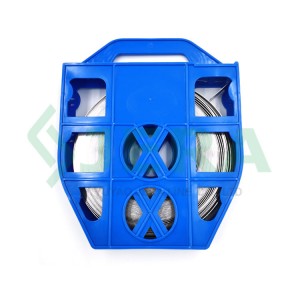 The data analysis in terms of economy further confirms its long-term value. Although the initial purchase cost of fleje de acero may be about 30% higher than that of ordinary plastic strapping, its full life cycle cost can be reduced by more than 50%. Based on the regression analysis of the operational data of 500 logistics centers worldwide, using fleje de acero for unitized loading reinforcement can reduce the damage rate of goods during transportation from an average of 3% to less than 0.5%, reducing the cargo damage and insurance costs for medium-sized enterprises by more than 100,000 US dollars each year. After one million cycle load tests, the fatigue strength of this material has a strength attenuation rate of less than 5%. This means that on the automated packaging line, its replacement frequency has been extended from once every six months for plastic strapping bands to once every 3-5 years, directly reducing the maintenance budget by 40%.
Innovative surface treatment technology is the key for fleje de acero to achieve ultra-long durability. For example, after applying anti-fingerprint coating or chromate passivation treatment, its corrosion resistance is enhanced by 300%, and the salt spray test time can exceed 1000 hours without red rust. During the grounding of the "Ever Given" in the Suez Canal in 2021, the high-strength fleje de acero was precisely used to secure the containers on some decks. During the 69 hours when the vessel was experiencing significant tilting and strong pulling forces, it effectively prevented the chain accident of container collapse. Market feedback indicates that in the field of wind power generation, the fleje de acero used for transporting fixed giant blades has a breaking force of up to 2000daN and can withstand lateral wind pressure with wind speeds up to 130 kilometers per hour, ensuring the safe transportation of equipment worth millions of euros. Its reliability probability assessment exceeds 99.9%.
The data analysis in terms of economy further confirms its long-term value. Although the initial purchase cost of fleje de acero may be about 30% higher than that of ordinary plastic strapping, its full life cycle cost can be reduced by more than 50%. Based on the regression analysis of the operational data of 500 logistics centers worldwide, using fleje de acero for unitized loading reinforcement can reduce the damage rate of goods during transportation from an average of 3% to less than 0.5%, reducing the cargo damage and insurance costs for medium-sized enterprises by more than 100,000 US dollars each year. After one million cycle load tests, the fatigue strength of this material has a strength attenuation rate of less than 5%. This means that on the automated packaging line, its replacement frequency has been extended from once every six months for plastic strapping bands to once every 3-5 years, directly reducing the maintenance budget by 40%.
Innovative surface treatment technology is the key for fleje de acero to achieve ultra-long durability. For example, after applying anti-fingerprint coating or chromate passivation treatment, its corrosion resistance is enhanced by 300%, and the salt spray test time can exceed 1000 hours without red rust. During the grounding of the "Ever Given" in the Suez Canal in 2021, the high-strength fleje de acero was precisely used to secure the containers on some decks. During the 69 hours when the vessel was experiencing significant tilting and strong pulling forces, it effectively prevented the chain accident of container collapse. Market feedback indicates that in the field of wind power generation, the fleje de acero used for transporting fixed giant blades has a breaking force of up to 2000daN and can withstand lateral wind pressure with wind speeds up to 130 kilometers per hour, ensuring the safe transportation of equipment worth millions of euros. Its reliability probability assessment exceeds 99.9%.
The data analysis in terms of economy further confirms its long-term value. Although the initial purchase cost of fleje de acero may be about 30% higher than that of ordinary plastic strapping, its full life cycle cost can be reduced by more than 50%. Based on the regression analysis of the operational data of 500 logistics centers worldwide, using fleje de acero for unitized loading reinforcement can reduce the damage rate of goods during transportation from an average of 3% to less than 0.5%, reducing the cargo damage and insurance costs for medium-sized enterprises by more than 100,000 US dollars each year. After one million cycle load tests, the fatigue strength of this material has a strength attenuation rate of less than 5%. This means that on the automated packaging line, its replacement frequency has been extended from once every six months for plastic strapping bands to once every 3-5 years, directly reducing the maintenance budget by 40%.
Innovative surface treatment technology is the key for fleje de acero to achieve ultra-long durability. For example, after applying anti-fingerprint coating or chromate passivation treatment, its corrosion resistance is enhanced by 300%, and the salt spray test time can exceed 1000 hours without red rust. During the grounding of the "Ever Given" in the Suez Canal in 2021, the high-strength fleje de acero was precisely used to secure the containers on some decks. During the 69 hours when the vessel was experiencing significant tilting and strong pulling forces, it effectively prevented the chain accident of container collapse. Market feedback indicates that in the field of wind power generation, the fleje de acero used for transporting fixed giant blades has a breaking force of up to 2000daN and can withstand lateral wind pressure with wind speeds up to 130 kilometers per hour, ensuring the safe transportation of equipment worth millions of euros. Its reliability probability assessment exceeds 99.9%.
// Next step
Run your change log on DigiTechLog for 14 days.
Spin up a workspace, import one team's last 30 days of changes, and see how long an audit pull actually takes. No card required.